Monday, April 1, 2013

Videos : Fat Joe : Ceilings To The Sky


Videos : Fat Joe : Ceilings To The Sky

Fat Joe has decided to keep the "Harlem Shake" meme going, contributing his own video to the mix.

Jury's out on it but in our opinion it's pretty sketchy. He might have been better off keeping that video on the hard drive.

Not the same for "Ceilings to the Sky," presumably a song from his upcoming LP The Darkside Vol. 3., which he's just released the video for.

Directed by MindMuscleCX, the clip finds Joe drenched in black and white, spitting his rhymes from a balcony perched high above what appears to be the Miami skyline.

On the track, Joe raps about his life of extravagance:

"Villa on the ocean, water look like mouth wash/ hundred acres, gotta move around a golf cart/ Panthers in the backyard, charged it to the black card/ now that's animal cruelty, interior designed by Emilio Pucci."

Not exactly reinventing the wheel there from a thematic standpoint, but we'll take it. Good job, Joe.

In other news, the BX veteran decided to keep the "Harlem Shake" meme going, contributing his own video to the mix. Jury's out on it but in our opinion it's pretty sketchy. He might have been better off keeping that video on the hard drive.

Contact Fat Joe
Website  | Facebook | Twitter  | MySpace  | iTunes

Contact The BoomBox
Website  | Facebook | Twitter 

Sources : Fat Joe Photo |Ceilings To The Sky Video | Fat Joe Article

Singles : Charli XCX : What I Like

Singles : Charli XCX : What I Like

Listen To Charli XCX : What I Like


Who Is Charli XCX?
Charlotte Aitchison (born 2 August 1992), better known by her stage name Charli XCX, is an English singer-songwriter. She released two singles in 2008, "Emelline"/"Art Bitch" and "!Francesckaar!". She was signed to This Is Music and IAMSOUND Records, before releasing three more singles, "Stay Away", "Nuclear Seasons", and "You're the One". She released two EPs in late 2011 while she completed her anticipated debut album, True Romance.

At the age of 14, Charli began recording her debut album, funded by her parents. Two singles, double A-side "Emelline"/"Art Bitch" and "!Franchesckaar!", were released in late 2008 under Orgy Music. Both of these appeared on the record, with versions recorded, along with thirteen other tracks, in 2006. The album was never commercially released, but Charli did distribute it as a young teenager to her friends at school, as well as selling it at her early shows. In an interview with Idol Magazine, Charli revealed that she wanted her stage name to stand for "Xrated Cunt Xrated", but the label would not allow this.

In 2011, she featured on two singles, "End of the World" by Alex Metric, and "Lost in Space" by Starkey. In May 2011, she released her first single in nearly three years, "Stay Away", followed by "Nuclear Seasons" in November, both produced by Ariel Rechtshaid and released exclusively in the UK. These singles gained attention from Pitchfork Media, where she gained Best New Track accolades for both tracks, with the former being ranked #35 on their Best Tracks of 2011 list. In late 2011, a five-track promotional sampler of Charli's debut album surfaced. All tracks were early demos, including an early version of "You're the One", titled "In the Dark"

In February 2011, Charli released two free tracks, the holiday-themed "Valentine" and "I'll Never Know" through her website. Charli XCX wrote and provided two tracks including "How Can I?" for the indie horror movie called Elfie Hopkins starring Ray Winstone and his daughter Jaime Winstone. She also released two free mixtapes via SoundCloud, containing tracks by her female and male influences, the first titled Super Girls, Super Love and the second entitled I Like Boys Who Cry. On 12 May 2012, she released her first original mixtape, titled Heartbreaks and Earthquakes, a one-track file consisting of eight songs, including "How Can I?". She supported Santigold and Coldplay on tour throughout summer.

On June 12, 2012, Charli released her debut EP You're the One in the US, featuring "You're the One" and "Nuclear Seasons", as well as remixes of both tracks. On June 14, "You're the One" was released as her debut single in Australia. The EP was later released in September in the UK and Australia, the UK version featuring the title track and "So Far Away", as well as three remixes. The Australian version contained the title track, "Stay Away", and "Nuclear Seasons". The Australian edition was also the only version of the EP to be released physically on CD. Her second original mixtape, Super Ultra was release exclusively through her website on 7 November 2012, featuring 8 separate tracks. She wrote and featured on Icona Pop's song "I Love It", which became a breakthrough hit for both artists, reaching the top 10 in numerous countries and serving as the theme song for Snooki & JWoww. She is to tour America and Canada with fellow friend and singer Marina and the Diamonds throughout May. Charli is then to support singer Ellie Goulding on a Europe tour of Germany, Poland, Italy, Switzerland and Dublin throughout April with her own UK tour to follow soon after which is to be announced. In March 2013, Charli XCX was named one of Fuse TV's 30 must-see artists at SXSW.


Contact Charli XCX
Website  | Twitter  | Facebook | YouTube | MySpace | Soundcloud | iTunes

Sources : Charli XCX Photo | Listen To What I Like | Charli XCX Biography

Videos : Shawn Hook : Two Hearts Set On Fire


Videos : Shawn Hook : Two Hearts Set On Fire

Who Is Shawn Hook?
Shawn Hook’s EMI Music debut, Cosmonaut and the Girl, says a lot about the artist, his direction and the music. Blessed with a stratospheric vocal range, heard right off the bat on the lead track, “Planet Earth,” and particularly on “Rockstaria,” the pianist and guitarist from Nelson, British Columbia shot for the stars on this recording, adding modern electronic elements to his organic singer-songwriter base.

“I’ve always been fascinated by space, astronomy and exploring,” says Shawn. “I was thinking of a cosmonaut and his girl. They rarely get to see each other. I relate to that because I’m never in one place for too long.”

The album, produced by Jon Levine (The Philosopher Kings, Nelly Furtado, Kreesha Turner), is a constellation of electro-spiked pop, like meteors of Paul McCartney and Elton John hurling through space collecting particles of Pet Shop Boys and Muse.

The first single, “Every Red Light,” is a pumping race to get to your girl, while “Dirty Little War” is a darker emotional string-laden piece about a nasty break-up with a slightly bigger political meaning as well. The mechanical and moody “Rockstaria” is a seductive aria for young hearts; “Middle Finger” a buzzing anthem for anyone who tells you “No, you can’t do that” and the heartbreaking “Love Is Patience” is for the loved one of a person with Alzheimer’s. Topics Shawn pulled from the 70 songs he wrote for the album.

He selected 12 for Cosmonaut and the Girl and this ambitious new sound he had always wanted to explore but couldn’t do properly as an independent solo artist without a band and means. He wrote “Fool,” “Rainbow” and “Love Is Patience” on his own and collaborated with numerous writers, including Better Than Ezra’s Kevin Griffin (“Two Shadows”), Richard Harris (“Two Hearts Set On Fire”), and Wide Mouth Mason’s Shaun Verreault (“Every Red Light”), but it wasn’t until he got together with Jon Levine that everything fell into place. The pair co-wrote “Planet Earth,” “Dirty Little War,” “Rockstaria,” “So Close,” “One Life” and “Middle Finger” together.

“Jon had a vision for this electronic vibe and I went with it. I trusted him and it inspired me,” says Shawn. “Working in Los Angeles, you can work with so many different people, but to find an identity or a sound is really rare. I was there for three for four years working with as many people as I could and I didn’t find it. Jon came along and this is it!” Perhaps it helped that Jon’s main instrument is also piano and they are both skilled and complex players with a pop sensibility.

Shawn began playing piano at age 4. He often brought little bits of compositions into his piano teacher, but he didn’t start writing lyrics until high school. His highest English marks were in poetry and once he started liking girls, he easily combined the two. “I remember having a few big high school crushes and when I saw them fall for other guys, it really upset me. My natural instinct was to sit at the piano and play what I felt. I’d play piano for hours on end until I felt better.”

Shawn made his first album in 2002 after his vocal teacher at a local music college offered to produce it. It was singer-songwriter style with more rock and was hand-sold to friends and family. A trombone player as well in high school, he also gigged in a disco cover band called Shag, which sometimes netted him $200-a-night. To this day, his says their lively stage show and sold-out crowds helped him develop as a performer. “I started writing a lot after that.”

His parents wanted him to have a solid profession so Shawn attended college for engineering. He spent most of his time in the music department. After two years, at age 20, he made up his mind to go to The Art Institute in Vancouver, a pricey recording arts school. At night, he performed at open-mics. After nine months, he hired a local engineer and armed with 50 originals, he picked the best and recorded another independent album in 2006.

To support the album and make a difference in the world at the same time, he and a friend formed a charity, Feed The Need, for which he performed at regional high schools and collected non-perishable items for the food bank. Today, the charity is registered and rebranded Live To Give. “I’m a big fan of Bono and John Lennon and what they stand for. They had a message and I want to do the same thing with my music,” says Shawn. He has already experienced music’s impact with his poignant piano ballad “Soldier,” which resonated with military families and schools, and led to some interesting opportunities.

Because of that song, he was flown to Los Angeles to showcase and started composing for film and television on a short-lived contract with ABC Studios. Other deal offers came, but before he signed anything foolish, he had the good fortune to meet his current manager in 2008, who started setting up showcases for him in LA and Canada with record labels, as well as the co-writes that appear on Cosmonaut and the Girl.

“Doing this record,” reflects Shawn, “I realize that it’s so important not to settle for anything. Back in the day, I was writing songs just to get them done. This experience taught me to not stop working on a song until it’s right. You feel that in your gut. You just know.

“It’s like it says in the song ‘Middle Finger;’ I feel like I’ve given in myself in the past, where people have had an influence on me and I finally went, ‘No. I don’t have to do it your way. I don’t have to give in. I have a vision and I’m going to do it my way.’ That’s what Cosmonaut is. It’s my way of exploring without ever having gone to space. It’s risky, but it’s something I have to do while I’m still young. I can always go back to just me behind a piano or guitar. But right now, this is fun and everything I envisioned for myself.”


Contact Shawn Hook
Website  | Twitter  | Facebook  | YouTube | Google+ | Tumblr | Press | Jack Booking | Zaed Booking

Sources : Shawn Hook Photo | Two Hearts Set On Fire Video | Shawn Hook Biography

Albums : Depeche Mode : Delta Machine

Albums : Depeche Mode : Delta Machine

Listen To Depeche Mode : Delta Machine


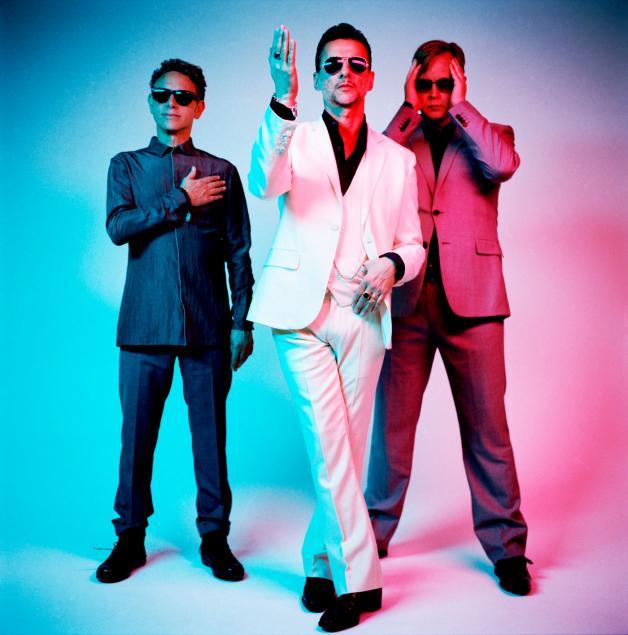
Who Is Depeche Mode?
Originally a product of Britain's new romantic movement, Depeche Mode went on to become the quintessential electro-pop band of the 1980s. One of the first acts to establish a musical identity based completely around the use of synthesizers, they began their existence as a bouncy dance-pop outfit but gradually developed a darker, more dramatic sound that ultimately positioned them as one of the most successful alternative bands of their era.

The roots of Depeche Mode date to 1976, when Basildon, England-based keyboardists Vince Clarke and Andrew Fletcher first teamed to form the group No Romance in China. The band proved short-lived, and by 1979 Clarke had formed French Look, another duo featuring guitarist/keyboardist Martin Gore; Fletcher soon signed on, and the group rechristened itself Composition of Sound. Initially, Clarke handled vocal chores, but in 1980 singer David Gahan was brought in to complete the lineup. After one final name change to Depeche Mode, the quartet members jettisoned all instruments excluding their synthesizers, honing a slick, techno-based sound to showcase Clarke's catchy melodies.

After building a following on the London club scene, Depeche Mode debuted in 1980 with "Photographic," a track included on the Some Bizzare Album label compilation. After signing to Mute Records, they issued "Dreaming of Me" in early 1981; while neither the single nor its follow-up, "New Life," caused much of a stir, their third effort, "Just Can't Get Enough," became a Top Ten U.K. hit, and their 1981 debut LP, Speak and Spell, was also a success. Just as Depeche Mode appeared poised for a major commercial breakthrough, however, principal songwriter Clarke abruptly exited to form Yazoo with singer Alison Moyet, leaving the group's future in grave doubt.

As Gore grabbed the band's songwriting reins, the remaining trio recruited keyboardist Alan Wilder to fill the technological void created by Clarke's departure. While 1982's A Broken Frame deviated only slightly from Depeche Mode's earlier work, Gore's ominous songs grew more assured and sophisticated by the time of 1983's Construction Time Again. Some Great Reward, issued the following year, was their artistic and commercial breakthrough, as Gore's dark, kinky preoccupations with spiritual doubt ("Blasphemous Rumours") and psychosexual manipulation ("Master and Servant") came to the fore; the egalitarian single "People Are People" was a major hit on both sides of the Atlantic and typified the music's turn toward more industrial textures.

Released in 1986, the atmospheric Black Celebration continued the trend toward grim melancholy and further established the group as a commercial force; it eventually sold over 500,000 copies in the U.S., which earned it gold status. Released in 1987, Music for the Masses, featuring three Hot 100 singles in "Strangelove," "Never Let Me Down Again," and "Behind the Wheel," propelled the group into the mainstream. The album would sell over a million copies in the U.S. alone. A subsequent sold-out tour yielded the 1989 double live set 101. Recorded at the Rose Bowl in Pasadena, California, it was accompanied by a concert film directed by the legendary D.A. Pennebaker.

With the alternative music boom of the early '90s, Depeche Mode emerged as one of the world's most successful acts. The triple-platinum Violator, released in 1990, was a Top Ten smash that spawned the hits "Personal Jesus" (a number eight single), "Enjoy the Silence," "Policy of Truth," and "World in My Eyes." Their 1993 LP Songs of Faith and Devotion — featuring a significant change in its heavy use of electric guitars — entered the charts in the number one slot. However, at the peak of its success, the group began to unravel, beginning with Wilder's 1995 exit. Gahan attempted to take his own life and later entered a drug rehabilitation clinic to battle an addiction to heroin.

After a four-year layoff, Depeche Mode continued onward as a trio and released 1997's Ultra, which featured the hits "Barrel of a Gun" and "It's No Good." A year later, the band embarked on a tour in support of its newly released hits album, The Singles 86>98. Depeche Mode played 64 shows in 18 countries for over one million fans. Each member took some considerable time off after the tour's completion, and Depeche Mode would not regroup for another three years.

Exciter, the band's follow-up to Ultra, was released in 2001, with the singles "Dream On" and "I Feel Loved" finding moderate success on international radio outlets. Two years later, Gahan issued his debut solo album, the dark and sultry Paper Monsters. Gore also followed suit by issuing the all-covers Counterfeit², a full-length sequel to his similarly themed 1989 EP. Each member supported his work with respective tours of the U.S. and Europe; however, the bandmembers soon resumed working together, and Playing the Angel, their 11th studio album, became a Top Ten hit upon its release in October 2005. Produced by Ben Hillier (Doves, Blur, U2, Elbow) and studded with singles like "Precious" and "John (The Revelator)," it topped the album charts in 18 countries and went multi-platinum and/or gold in 20 countries. Depeche Mode went on to play for more than two and a half million fans worldwide, and the DVD release Touring the Angel: Live in Milan (2006) captured one of the band's greatest shows. Sounds of the Universe, also made with the assistance of Hillier, arrived in early 2009 and debuted at number three in the U.S. The 2013 release of Delta Machine made for a trilogy of Hillier albums, while the album was mixed by longtime Depeche associate Flood. ~ Jason Ankeny & Andy Kellman, Rovi

Delta Machine Review
The opening beats pulsate atop approaching synths, signifying the awakening of a sleeping beast. Sounds rather frightening, but really it’s just the welcome return of the hardly dormant Depeche Mode, and the sleeping beast is lead singer, Dave Gahan. With lucky album number 13, Delta Machine, Martin Gore and company don’t aspire to break new ground, opting instead to keep building on a solid foundation. For so many long-standing artists, that isn’t the easiest move to make, considering the inevitable cracks of reference and rehash that plague the way. While there are a few of these cracks on the record, there aren’t enough to prevent Depeche Mode from rolling out another good release. Consensus would say that the Essex trio peaked in 1990 with the classic Violator; featuring radio hits “Enjoy the Silence”, “Personal Jesus”, and “Policy of Truth”. With that triumvirate of tunes, it’s hard to disagree. However, what hovers above, around, and just below Delta Machine is the synth-blues rock of 1993’s Songs of Faith and Devotion. You can hear “I Feel You” in every slow stomp and twang in “Slow”, as well as album closer “Goodbye”. Despite these call-backs, the group makes it work thanks to Gahan’s vocals, which have managed to stay in remarkable shape after living the hard life for a number of years.

“My Little Universe” is Gahan’s highlight. He’s as close to the mic as you can get, so when he declares, “Here I am king / I decide everything / I let no one in / No one,” you believe him. With verses playing out over Gore’s simple synth-loop, the band proves that less can be more. This minimalistic approach ignites “Welcome to My World”, giving the track room to build to its climax. The album’s sound is so concrete, it’s no surprise Flood was the man responsible for fitting all the pieces together, mixing for the band for the first time since Faith and Devotion.

Speaking of, more songs of faith and devotion appear on Delta Machine. “Angel” and “Heaven” refer to, well, an angel and Heaven. However, darkness haunts both. The former features the verse, “The angel of love was upon me / And Lord, I felt so small / The legs beneath me weakened / I began to crawl.” The latter appears more resilient, but is it? “I will scream the word / Jump into the void / I will guide the world / Up to heaven.” It sounds uplifting at the end, but…screaming and jumping into a void?

What goes on in the mind of the man who wrote the lyrics for those two tracks? It isn’t Gahan (who does contribute lyrics for a few songs), it’s Gore. In addition to being the main creative force since Vince Clarke left over 30 years ago, he’s always there. His words provide a foundation for Gahan’s vocals. Gahan/Gore harmonies lift every song (hear: “Alone”). Gore gets his lone lead vocal in “The Child Inside”, with Depeche Mode’s leader at his most dramatic. Every last word of a line gets added vibrato, but he pulls back to avoid entering the land of melodrama.

Certain tracks manage to squeeze on by with references to the past, but one trips hard. “Soothe My Soul” comes a little too close to “Personal Jesus” for comfort, with the same verse/chorus structure the band offered up 20-some-odd years ago. An overarching problem Delta Machine has to contend with is that aforementioned decision to soldier on down the well-worn, beaten path. While at the end of the day the formula still works, it just isn’t as fresh as it once was to demand immediate repeat listens.

But Delta Machine does deserve repeat listens. There’s a reason Depeche Mode continues to thrive both live and in-studio: passion. Yes, that emotional definition is overused. However, if the synths, keyboards, and guitars don’t convince you, look to those unmistakable vocals from Gahan and Gore, showing in song after song that they still give a shit after all these years.


Contact Depeche Mode<
Website | Facebook | Twitter | Tumblr

Contact Consequence of Sound (COS)
Website | Twitter | Facebook | YouTube

Sources : Depeche Mode Photo | Listen To Delta Machine | Depeche Mode Biography | Delta Machine Review

Purchase : iTunes (Deluxe Version) | Amazon | Best Buy | Walmart (Deluxe Version) | Walmart

Videos : Joe Budden ft. Wiz Khalifa, French Montana : NBA


Videos : Joe Budden ft. Wiz Khalifa, French Montana : NBA

Who Is Joe Budden?
The ridiculous success of 50 Cent in early 2003 opened the floodgates for other street-level, mixtape-bred rappers, one of whom was Joe Budden, a Jersey City rapper with a distinct loose-cannon style molded from years of freestyling. Born in Spanish Harlem and raised in Queens, Budden came of age across the Hudson River in Jersey City, which he proudly continued to rep in his rhymes despite its somewhat unsavory reputation relative to more traditional hip-hop breeding grounds like Harlem, Brooklyn, the South Bronx, and Queensbridge. Following some troubled teenage years, Budden cleaned himself up and focused his sights on hip-hop fame. He teamed up with producer Dub-B (aka White Boy) and began making demos, one of which ended up in the hands of DJ Clue.

Soon afterward, Budden was a mixtape fixture, freestyling over popular beats on mixes by New York's leading DJs, most notably Clue, DJ Kayslay, and Cutmaster C. In particular, his "Grindin'" freestyle turned heads, as did one of his White Boy productions, "Focus." It wasn't long before Budden joined On Top management and went to work with Just Blaze, one of New York's hottest producers of the moment, best known for his work with Jay-Z but also respected for his sure-fire freelance work, such as Erick Sermon's "React" and Cam'ron's "Oh Boy." Indeed, a sure-fire hit resulted: "Pump It Up," a club-ready track that connected everywhere, from MTV to the streets.

While all of this was going down, industry heavyweight Def Jam signed Budden and prepared his debut album Joe Budden, which charted well its opening week, earned some critical support, and foreshadowed a bright future for the refreshingly unique rapper. Unfortunately, a changing of the guard at Def Jam meant the executives who had signed Budden were gone. His next album would remain in limbo until late 2008 when the Halfway House mixtape arrived with an announcement that the rapper had signed with Amalgam Digital.

A year later fans were greeted with a flurry of activity, beginning in February, when his album Padded Room landed in stores. Featuring Budden with Crooked I, Joell Ortiz, and Royce da 5'9", the self-titled album from the hip-hop supergroup Slaughterhouse followed in August, and then he returned to his solo career in October with Escape Route. In 2010, his Mood Muzik mixtape series graduated from the underground when the eOne label released Mood Muzik, Vol. 4: A Turn for the Worst. He rejoined Slaughterhouse for their 2012 effort Welcome to Our House, and then returned to his solo career with 2013's No Love Lost, a reflective album with guests stars Lil Wayne, Wiz Khalifa, and Juicy J.A.W.O.L. (2005). In 2004 the double-disc retrospective Decade 1994-2004 looked back over his career to date, gathering up various highlights.


Contact Joe Budden
Website  | Twitter  | Facebook  | Email

Contact Wiz Khalifa
Website | Twitter | Facebook | YouTube | Press | Booking

Contact French Montana
Website | Twitter | Facebook | Tumblr | YouTube | MySpace | iTunes | Coke Boys | Email

Sources : Joe Budden, Wiz Khalifa, French Montana Photo | NBA Video | Joe Budden Biography

Singles : Martin Solveig & The Cataracs feat. Kyle : Hey Now

Singles : Martin Solveig & The Cataracs feat. Kyle : Hey Now

Listen To Martin Solveig & The Cataracs feat. Kyle : Hey Now


Who Is Martin Solveig?
It was just one record that catapulted Martin Solveig from a well-respected DJ into one of the most formidable producers and performers in the world. ‘Hello’ has now sold over 2 million copies and earned a global recognition, achieving platinum status in America, Italy, Germany and Austria, as well as going twice platinum in Canada and in Australia... His music videos are renowned as by far the best in their class and his performances continue to electrify audiences in every corner of the globe. With his fourth studio album “SMASH” still seeing its release territory-by-territory, Martin continues to draw us into a world of pure and unparalleled fun…

Martin Solveig’s journey from playful DJ to superstar music maker is as animated as the man himself, so let’s indulge in a spot of history… still in the making.

Like so many, Martin’s love affair with music began at an early age, influenced by luminaries such as Prince, Lenny Kravitz, Stevie Wonder and Serge Gainsbourg. His eccentric taste and non-conformist attitude have been the backbone of what he is today – a multi faceted artist. He sings, he produces, he deejays, he acts and occasionally he dances too as well as a spot of tennis.

Aged 21, Solveig started his own label called Mixture Stereophonic & released ‘Heart of Africa’. The track went on to sell 10,000 copies, offering a clear signal to Martin that a career in music was well worth pursuing. Martin’s first album, “Sur La Terre” released in 2002, achieved critical acclaim and enabled the Parisian to work with Salif Keita for whom he remixed ‘Madan’, one of 2003’s biggest club anthems. The afro-disco bomb as well as Martin’s new funk driven ‘Rocking Music’ both helped to catapult his career to a whole new level.

Next up came the “Hedonist” album, packed with a ream of hit singles such as ‘Everybody’, ‘Jealousy’ and ‘Rejection’, and indicating quite clearly that Martin Solveig had well and truly arrived. “C’est La Vie”, Martin’s 3rd studio album, was his biggest to date, selling in excess of 300,000 copies and winning over fans from far and wide.

In 2009, Martin was presented with two of the most prestigious accolades any Frenchman could hope to win – the ‘Chevalier Des Arts et Des Lettres’ for his contribution to the arts, and the ‘Artiste de Musiques Electroniques de l’Annee’ award at the French Victoires de la Musique – further testament to his ever-growing popularity and truly forward-thinking music style and creativity.

As 2010 was drawing to a close it became very clear that “Hello” would be his biggest career landmark to date… that is until now… The genius creation that is the SMASH YouTube series, Solveig’s own, came to define a new breed of music videos, signalling Martin as a creative force, more powerful than most of his contemporaries – regularly described by many critics as being “in a league of his own”.

First came the legendary Roland Garros stadium, then the incredible Stade De France, a rooftop pool in Singapore as well as sequences shot in Japan. There really is nothing to halt the series from going on to achieving so much more. And this is without touching on the soundtrack that accompanies each episode.

“SMASH” is a modern day masterpiece, bursting at the seams with pure fun, frivolity and all capped off with timeless trademark sounds. Involving the undeniable talents of Dragonette, Bloc Party front man Kele, Sunday Girl plus US whirlwind DEV – it brings Martin to new and dizzying heights.

With Solveig’s magic and finesse for producing music so easily accessible came the demand from the biggest names in music, and right at the front was most successful female recording artist of all time - Madonna. The latter half of 2011 saw Martin Solveig achieve what is surely every pop producer's dream, immersing himself in the production of what will be Madonna’s 12th studio album, entitled M.D.N.A. The lead single from said album, ‘Give Me All Your Luvin’, a Solveig produced masterpiece, is just one of 6 cuts that will surely cement the Frenchman as a solid production force in an industry that seems intent on exploding. Dance music meets pop is well and truly here, and Martin Solveig is all over it.

2012 will be like no other for the unassuming master, whether it’s headlining festival stages, including a debut performance at Coachella, or performing on national TV the world over for millions of viewers. Everything the man approaches, he does with the same intensity and flare that has spanned his entire career; he has an innate ability to make each and every person in a room feel welcome, invited and free of inhibitions. At the end of the day this boils down to one thing, Martin Solveig is one of the most exciting and talented performers in the world.


Contact Martin Solveig
Website  | Twitter  | Facebook | YouTube | MySpace | Google+ | Soundcloud | iTunes

Contact The Cataracs
Website | Facebook | Twitter | YouTube

Contact Kyle
Website | Facebook | Twitter | YouTube | Soundcloud | Blog

Sources : The Parlotones Photo | Listen To Shake It Up | The Parlotones Biography

Videos : AZ : Thank You


Videos : AZ : Thank You

Who is AZ?
One of the numerous thoughtful gangsta rappers to emerge from New York during the mid-'90s, AZ enjoyed critical success early in his career, particularly with his debut album, Doe or Die (1995), but commercial success largely eluded him over the years. Born in Brooklyn, he initially garnered attention with his guest feature on "Life's a Bitch," one of the standout tracks on Nas' landmark debut album, Illmatic (1994). In the wake of Doe or Die's critical success, AZ collaborated with Nas in the ill-fated supergroup the Firm and released Pieces of a Man (1998), another critical favorite. But for the most part, that was it from AZ for several years as he fell by the wayside, not surfacing in a big way again until a pair of Motown releases, 9 Lives (2001) and Aziatic (2002), that didn't sell any better than his previous efforts. He subsequently took his music underground, periodically releasing albums such as A.W.O.L. (2005). In 2004 the double-disc retrospective Decade 1994-2004 looked back over his career to date, gathering up various highlights.


Contact AZ
Twitter | Facebook | YouTube | Google+ | Email

Sources : AZ Photo | Thank You Video | AZ Biography